
Selected Work
I lead cross-functional teams and executive stakeholders to turn fragmented systems into cohesive, human-centered experiences at scale—aligning strategy, experience, and operations to deliver outcomes that hold up in the real world.
01
A statewide service design initiative translating educator insight into a retention strategy that shaped policy, funding, and system-wide change.
Influenced legislation • Adopted statewide • Built internal capability to sustain impact

The Challenge
Teacher retention isn’t a single problem—it’s a system-wide failure shaped by workload, culture, leadership, and policy.
The State Department of Education needed a way to move beyond fragmented insights and define a clear, actionable path forward—one that could drive alignment across districts and influence decisions at the state level.
My Role
Service Design & Strategy Lead
-
Led a full-scale service design program across a complex public sector ecosystem
-
Directed cross-functional research, synthesis, and experience strategy
-
Facilitated executive and stakeholder alignment across the Department and districts
What I Did
1. Built a System-Level Understanding
Led research across educators, administrators, and stakeholders to uncover the real drivers of retention—moving beyond assumptions to evidence-based insight.
2. Translated Insight into Actionable Frameworks
Defined a set of Retention Levers—a clear, structured model that reframed retention as a system of interconnected drivers rather than isolated issues.
3. Aligned Stakeholders Around a Shared Direction
Facilitated co-creation workshops to move diverse stakeholders from insight → alignment → prioritized action.
4. Designed for Adoption, Not Just Delivery
Developed tools, frameworks, and a capability-building program to embed human-centered design within the Department—ensuring the work could scale and sustain beyond the engagement.
The Outcome
-
Established a statewide teacher retention framework adopted by the Department of Education
-
Informed legislative discussions and funding decisions, contributing to policy-level impact
-
Enabled cross-district alignment and shared understanding of retention drivers
-
Launched a capability-building program to sustain human-centered design practices internally
Why This Matters
This work shifted the conversation from:
-
Isolated initiatives → System-level change
-
Assumptions → Evidence-based strategy
-
One-time delivery → Sustained capability
It’s an example of how service design can move beyond experience improvement to influence policy, funding, and long-term outcomes at scale.

02
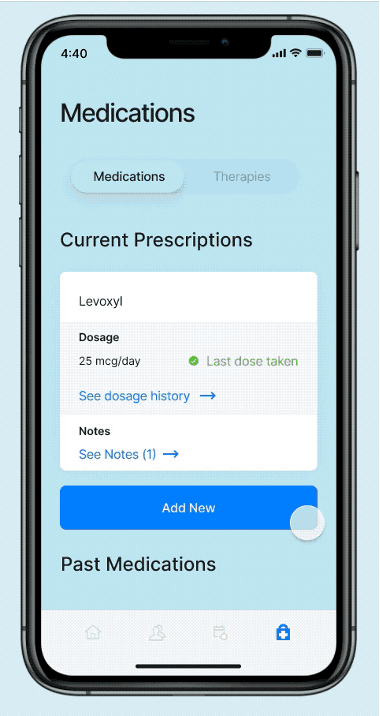
Designed a connected caregiving experience that transforms fragmented signals into meaningful insight—supporting independence for seniors and confidence for caregivers.
Defined product vision • Unified cross-functional teams around a shared roadmap • Transformed care form reactive to proactive
The Challenge
As the aging population grows, caregiving is becoming increasingly complex—fragmented across family members, healthcare providers, and disconnected technologies. Caregivers lack visibility. Seniors lose independence. And existing solutions often create more noise than clarity.
My Role
Service Design & Experience Lead
-
Led cross-functional design across research, product, and engineering
-
Partnered with executive stakeholders to define product vision and strategy
-
Directed end-to-end experience design—from ecosystem mapping to product concept
What I Did
1. Made the Invisible Visible
Led discovery to map the caregiving ecosystem—identifying breakdowns across communication, awareness, and decision-making.
2. Defined a New Experience Model
Translated insights into a connected care model that balances:
-
Independence for seniors
-
Confidence for caregivers
-
Actionable insight over passive monitoring
3. Designed a Cohesive Product System
Directed the design of an integrated experience combining:
-
Ambient sensor technology
-
Mobile interfaces for caregivers
-
Insight-driven alerts and summaries
4. Aligned Teams Around a Shared Vision
Facilitated cross-functional workshops to align stakeholders on priorities, experience principles, and roadmap direction.
The Outcome
-
Established a clear product vision for connected caregiving
-
Enabled teams to move from fragmented ideas → aligned roadmap
-
Created a system that supports proactive care, not reactive response
-
Delivered an experience that balances human dignity with intelligent insight
Why This Matters
This work reframes caregiving from:
-
Monitoring → Understanding
-
Reacting → Anticipating
-
Managing → Supporting independence
It’s an example of how thoughtful design can transform not just products—but relationships, trust, and quality of life.
03
Connected employee experience to customer outcomes by turning operational complexity into a measurable, experience-driven system.
Quantified experience impact • Shaped investment decisions • Connected employee experience to business performance

The Challenge
Customer experience was breaking down—but the root cause wasn’t just external.
At a large transportation and logistics organization, employee experience gaps were directly impacting service quality, consistency, and customer trust.
The organization needed to understand:
-
What employees were actually experiencing day-to-day
-
Where breakdowns were occurring across the system
-
How to translate those insights into actionable, measurable change
My Role
Service Design & Experience Strategy Lead
-
Led end-to-end service design across a complex, operationally intensive environment
-
Directed research, synthesis, and experience modeling across employee journeys
-
Partnered with cross-functional and executive stakeholders to define strategy and priorities
What I Did
1. Got Under the Hood of the System
Led in-depth field research across roles and environments to understand the realities of frontline employee experience—capturing both operational constraints and human impact.
2. Identified Patterns Across the Experience
Synthesized research into key experience dimensions, revealing where friction, inefficiency, and breakdowns were consistently occurring.
3. Designed for System-Level Change
Translated insights into a structured experience model that connected employee experience directly to operational performance and customer outcomes.
4. Made the Experience Measurable
Developed a quantifiable framework to assess employee experience—enabling the organization to track impact and prioritize improvements over time.
The Outcome
-
Established a clear link between employee experience and customer outcomes
-
Delivered a measurable framework to track and improve experience over time
-
Enabled leadership to prioritize investments based on experience-driven insights
-
Positioned employee experience as a strategic lever for business performance
Why This Matters
This work reframed employee experience from:
-
Internal concern → Business-critical driver
-
Anecdotal feedback → Quantifiable system
-
Isolated improvements → Connected experience strategy
It demonstrates how service design can bridge operations, people, and performance—turning internal experience into external impact.